

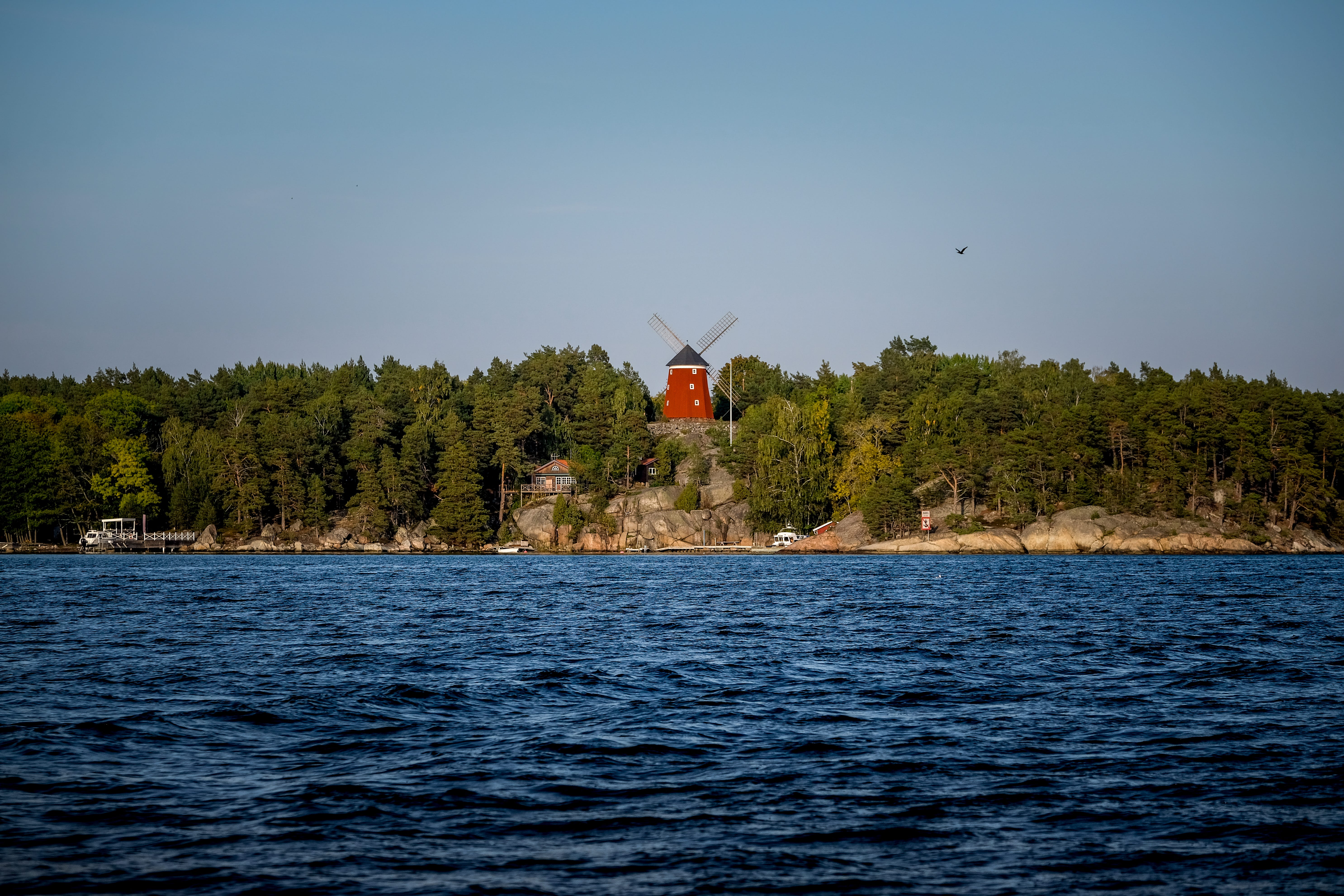
Every time I enter the northern outer archipelago, I feel the same shift — a quiet click somewhere inside the ribcage. Civilisation ends early out here. A red windmill on a forested cliff marks the border like a friendly but slightly eccentric gatekeeper. Beyond it, you’re not really in Sweden anymore. You’re in something older.
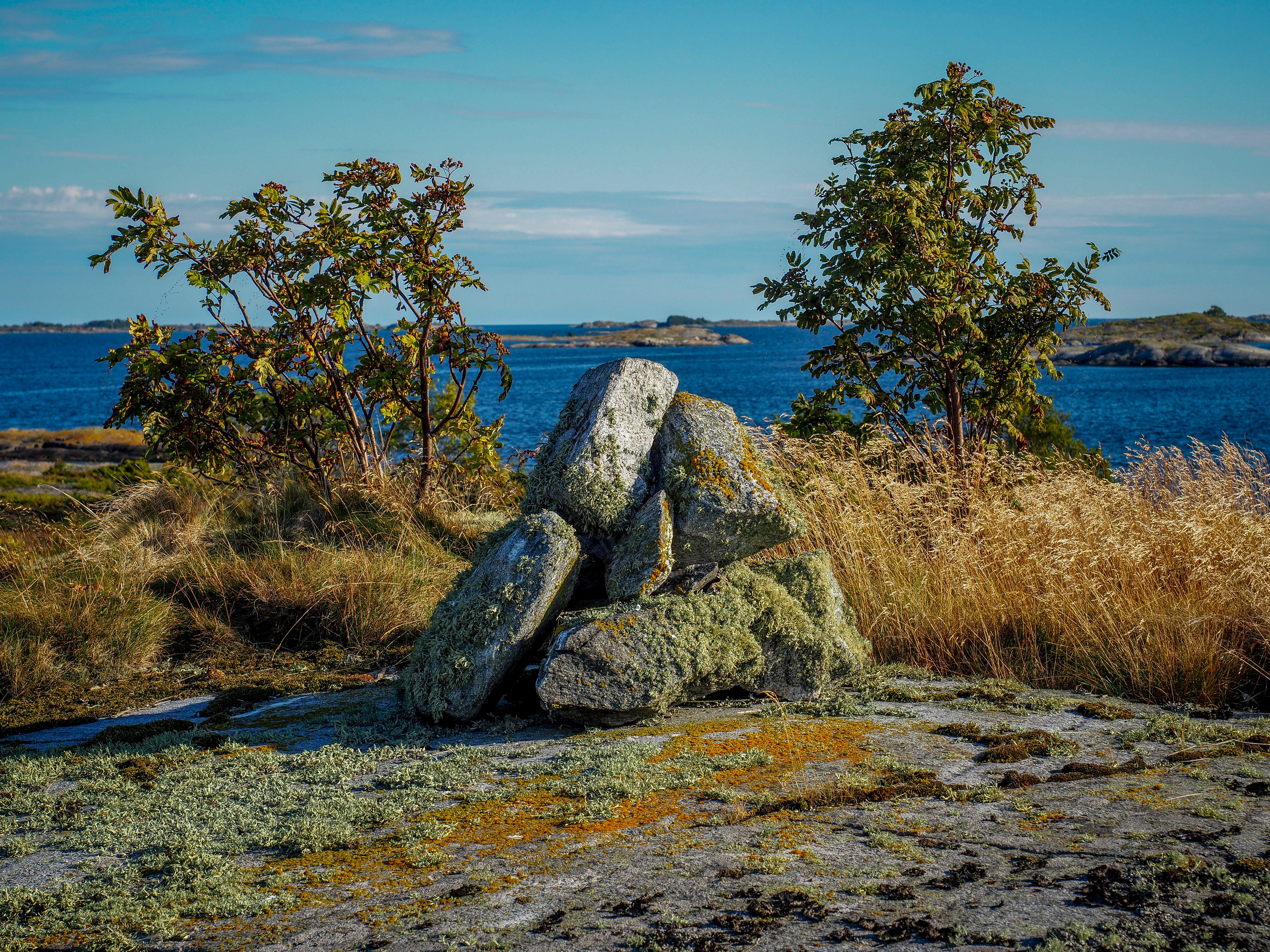
The moment you step onto the granite, it’s obvious. The rock itself looks ancient enough to predate the idea of people, and the rowan trees cling to it with the stubbornness of things that evolved in a world without help.
My English wife once described this landscape as “Jurassic,” which wasn’t a romantic flourish — it was simply the most accurate cultural reference she had for a place that feels untouched by the last ten thousand years.
This is where I spent every summer of my childhood, my teens, and most of my adulthood. A training ground disguised as a wilderness. A home disguised as stone.
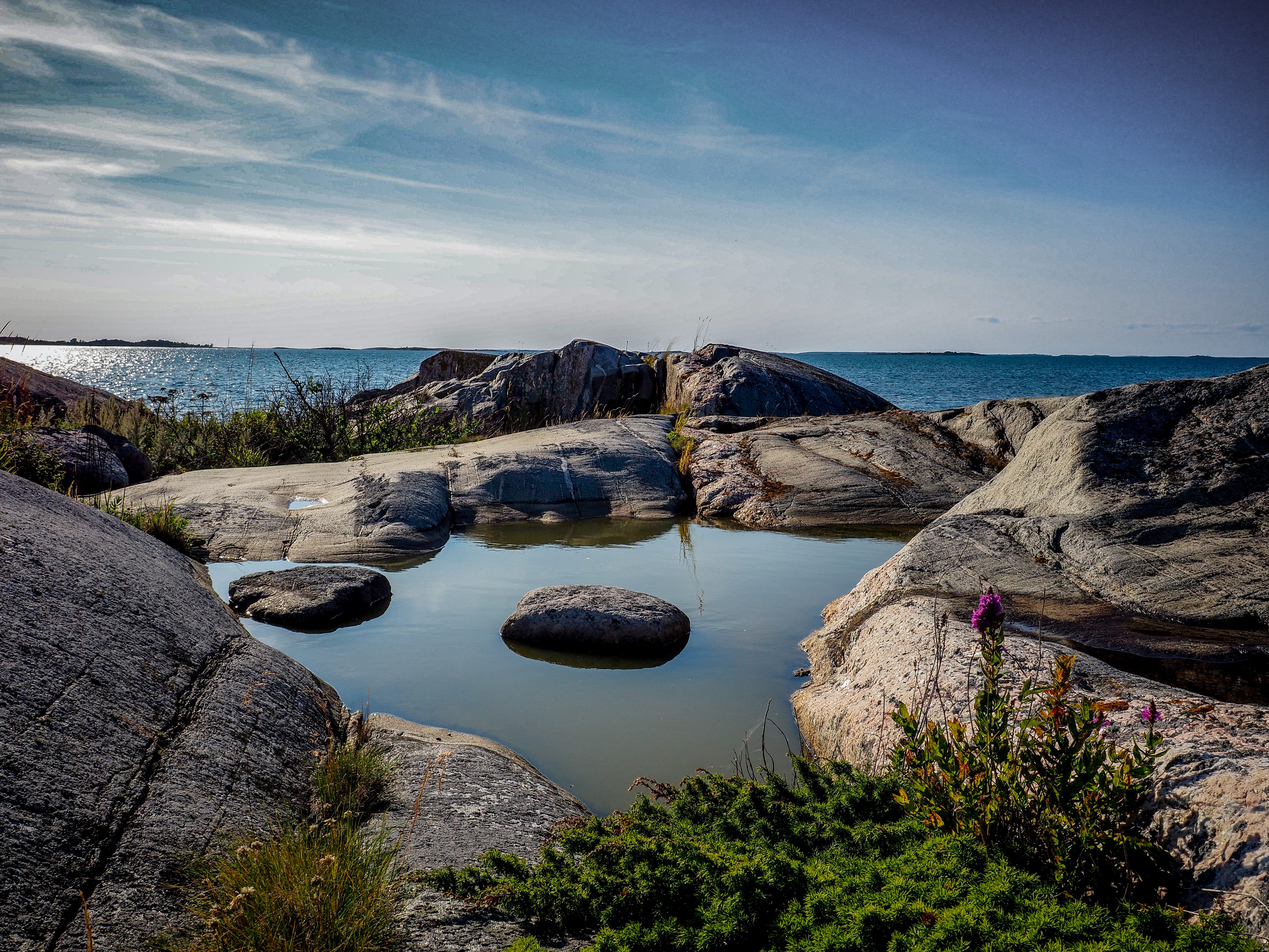
Move a little further out and the archipelago stops trying to be welcoming. The trees thin out, the wind turns honest, and the granite reveals the marks of the last ice age as if it happened last Tuesday.
These rock pools are tiny worlds — self-contained, fragile, and oddly contemplative. They’re where I learned stillness long before I learned meditation. If you sit by one long enough, the rhythm of the sea starts to reorganise your thoughts whether you invited it to or not.
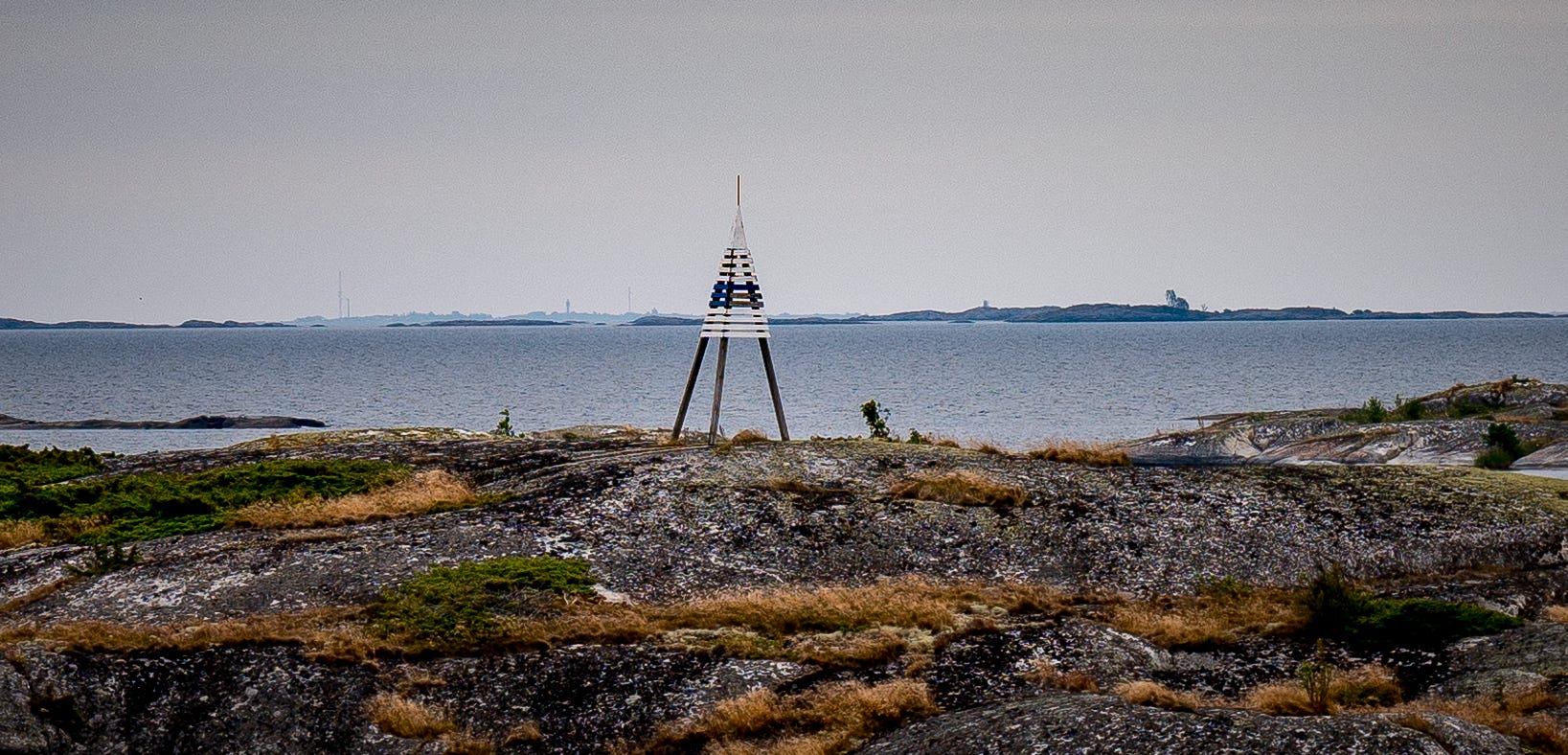
A few hundred metres away, the striped navigation marker stands like a relic from a civilisation that briefly attempted to impose order on the landscape. These markers are not decorative. They’re warnings written in timber: Pay attention, or you won’t get home.
Out here, the contrast is always the same — intimate calm in the hollows, raw exposure the moment you cast off again. The outer archipelago teaches you that safety and danger can sit on the same rock and mind their own business.
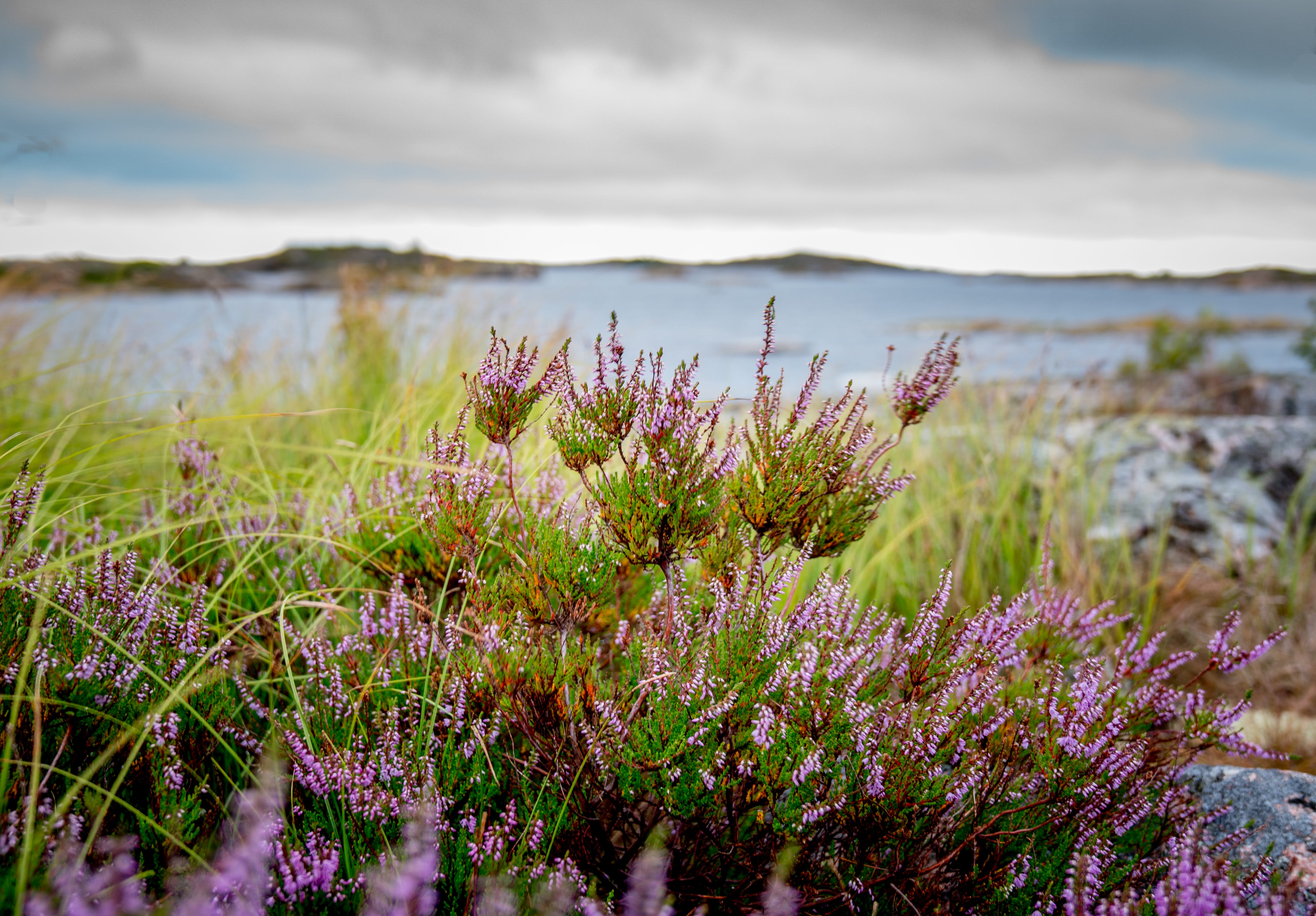
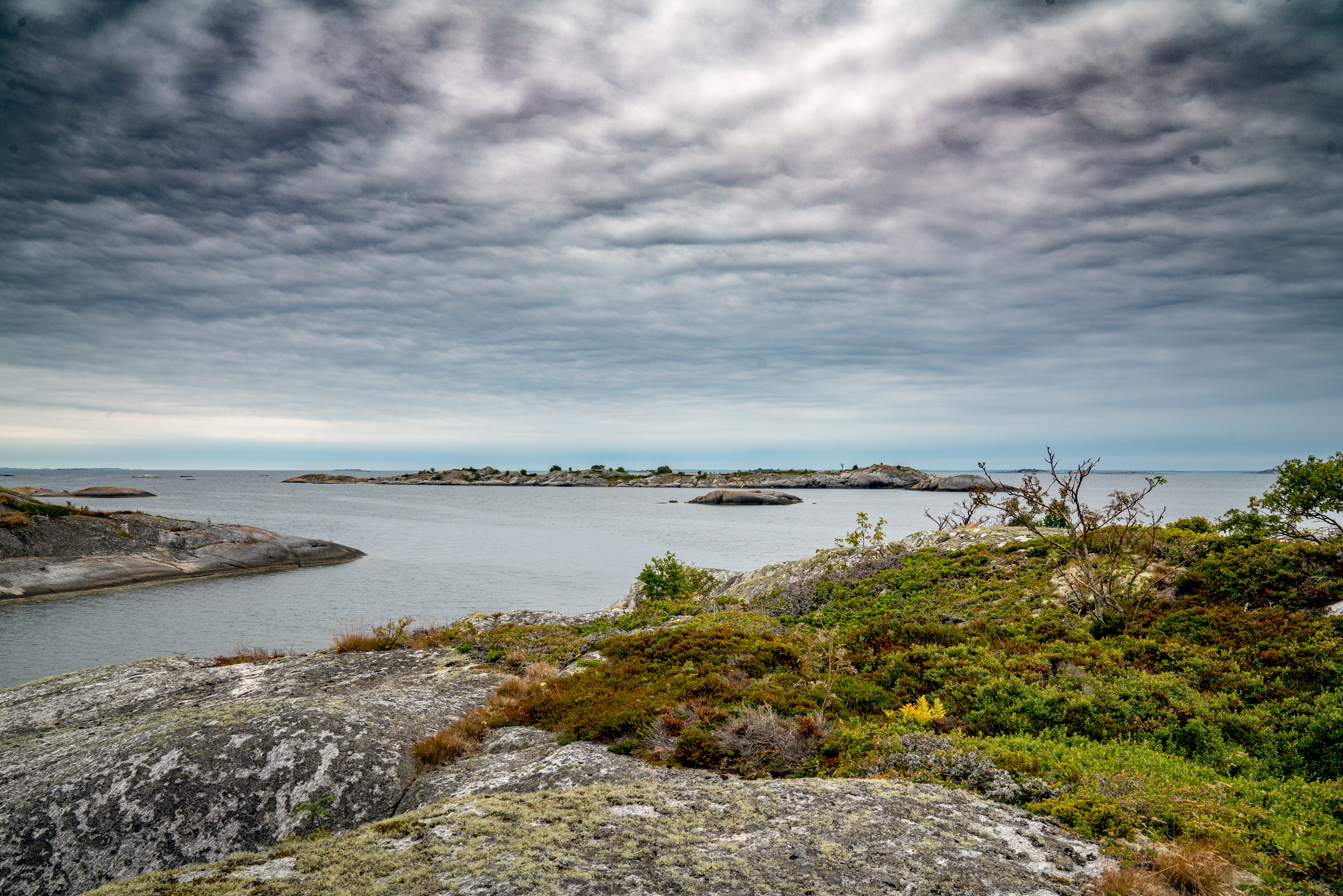
For all its bareness, the archipelago is full of small, stubborn miracles. Heather grows here in two moods — under bright, merciless sun and under skies heavy enough to knead the horizon into a single grey slab. Both versions are true. Both survive.
As a child, I used to think the plants here were somehow heroic. Now I think they’re simply honest. Nothing survives on these rocks unless it adapts, digs in, and refuses to apologise for being slightly scruffy around the edges. There’s a lesson in that, but the islands never spell it out. They just show you, year after year, what endurance looks like when no one is watching.
When I moor the boat in one of these quiet coves — whether it’s the powerboat in these photos or the sailing boat I grew up with — the silence always hits first. Then the stillness. Then the deeper truth: the moment you cast off again, the world becomes invigoratingly alive.
The archipelago doesn’t offer comfort. It offers perspective. And that’s why I keep coming back.