

The Approach
Imagine walking into a place that looks perfectly normal — fields, hedgerows, a well-behaved footpath — and then realising the landscape is quietly, stubbornly older than your entire family tree.
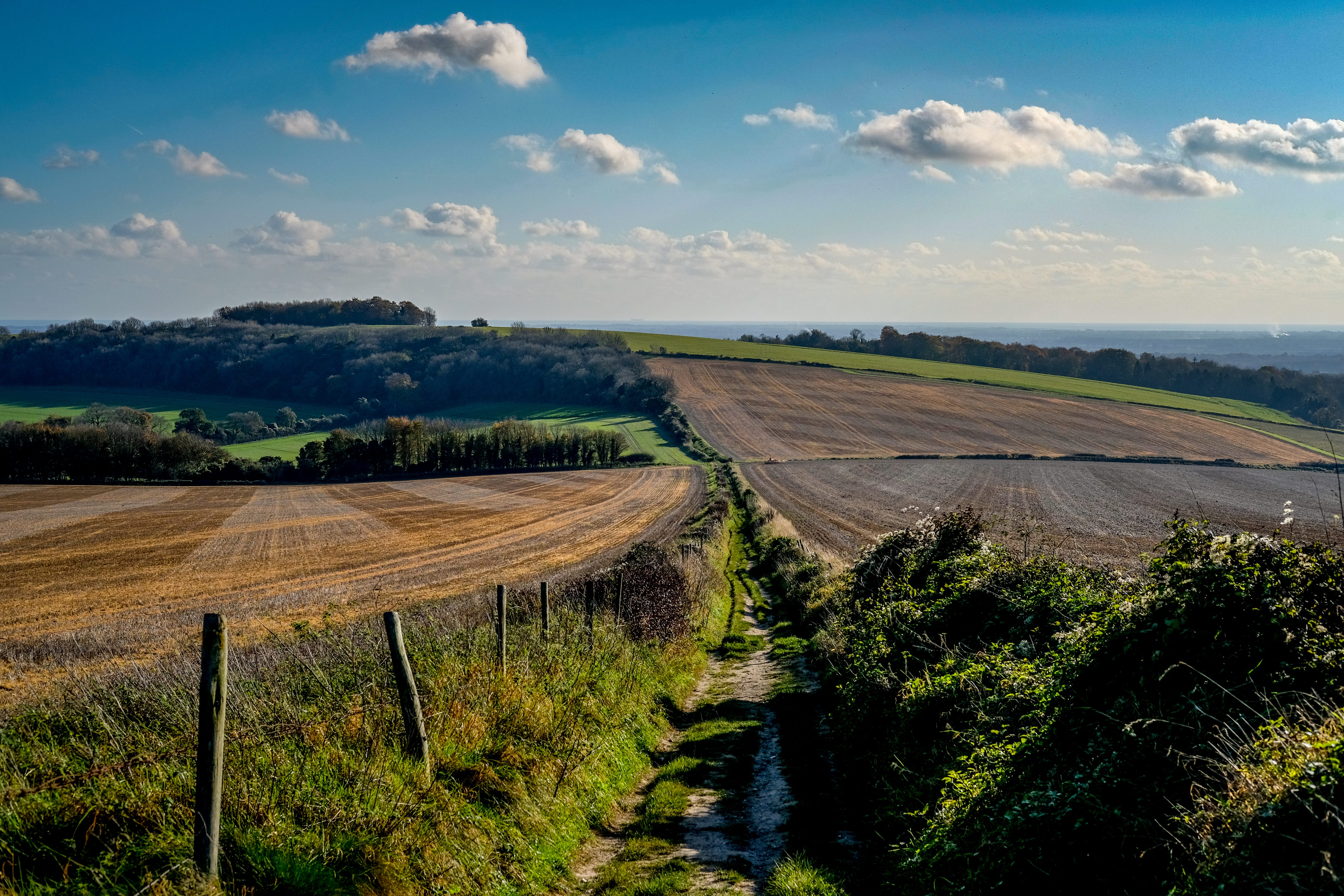
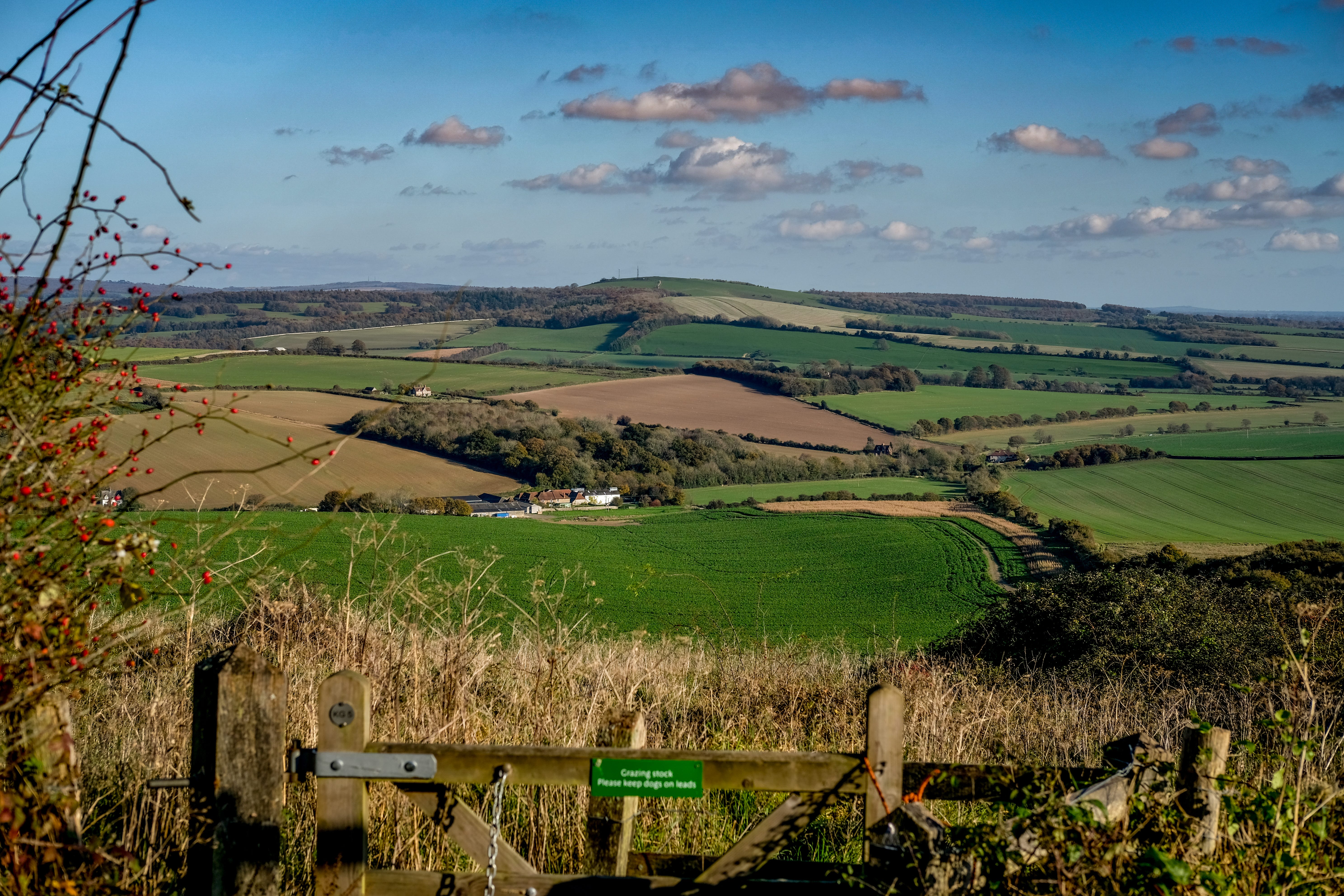
Kingley Vale begins innocently enough. A long track running arrow-straight through harvested fields, the kind of agricultural minimalism England does so well. But there’s a shift as you climb: the air gets still, the light takes on a weight, and the path stops feeling like a path and starts feeling like an invitation.
Even on a bright day, there’s something slightly off-script about it. Not sinister — just the sense that the place has its own agenda and you’re merely a tolerated guest.
This is the South Downs at their most deceptive: generous with the view, stingy with the meaning.
The High Ground & Quiet Shapes
Once you crest the ridge, the landscape begins hinting at its secrets — and this is where the history becomes almost comedic in its British understatement.
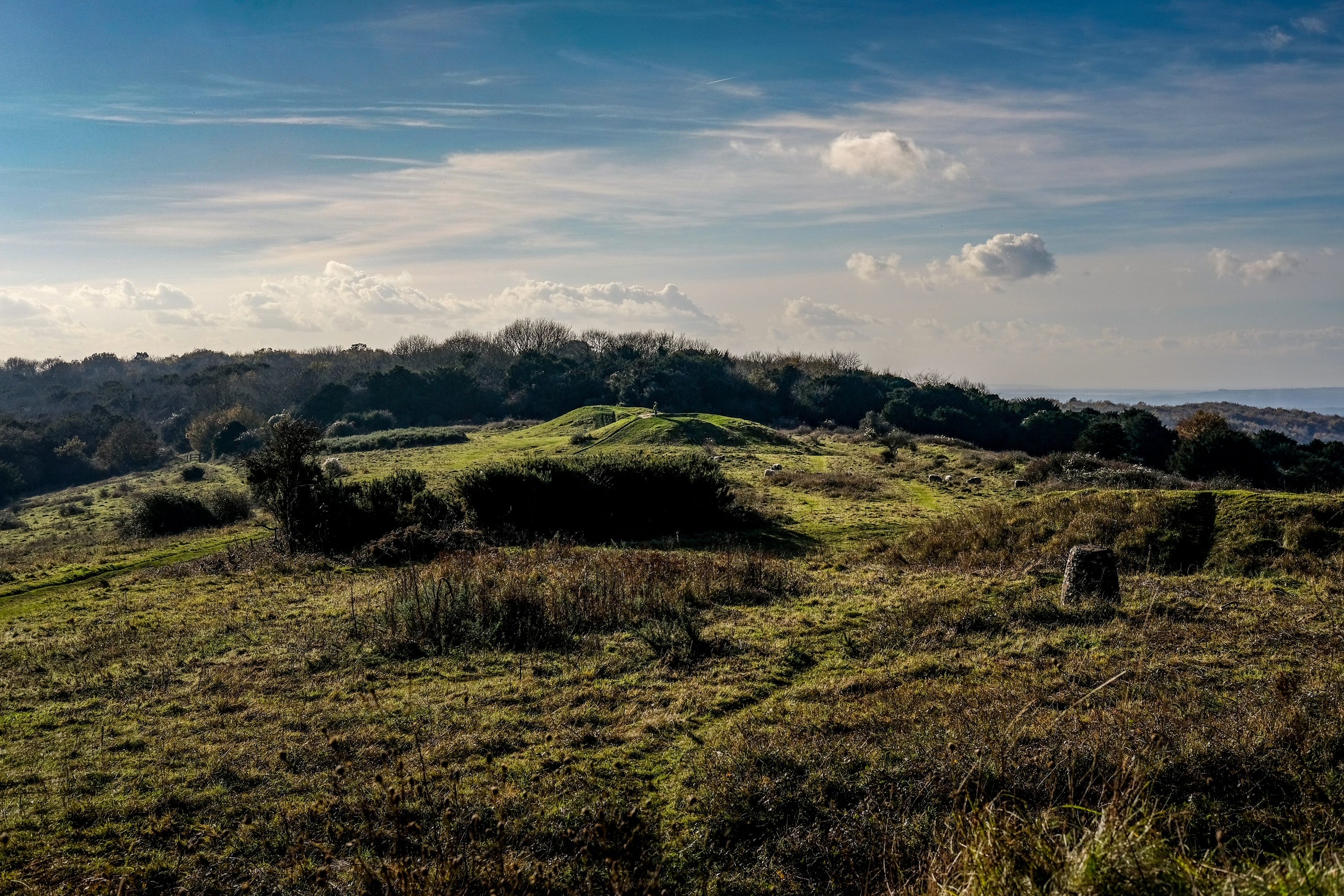
You wander past ancient yews — some 500 years old, some maybe pushing 1,000 — twisted into shapes that look like they’re trying to say something but have long given up on the vocabulary. Then the path opens into the crown of the hill where the Devil’s Humps, four Bronze Age burial mounds, sit like giant punctuation marks left by a civilisation that didn’t believe in subtlety.
Local folklore claims a Viking war band was defeated here, their leaders buried in the barrows. Real historians politely raise an eyebrow. But honestly: Kingley Vale is precisely the kind of place where a few Vikings could have slipped in, mingled, caused trouble, and overstayed the party — so let’s not rule them out entirely.
What is certain is that people have been doing dramatic things here for at least 3,000 years, and that the soil has a suspicious habit of giving up shrapnel, bones, and the occasional unexploded surprise. Even in the 1990s more than 6,000 WW2 munitions were cleared from the valley. A lovely spot for a picnic, provided you pick the right patch.
And yet, standing there, the barrows just look… peaceful. Almost domestic. As if the ancient dead are simply enjoying the view, same as you.
Looking Out From the Past
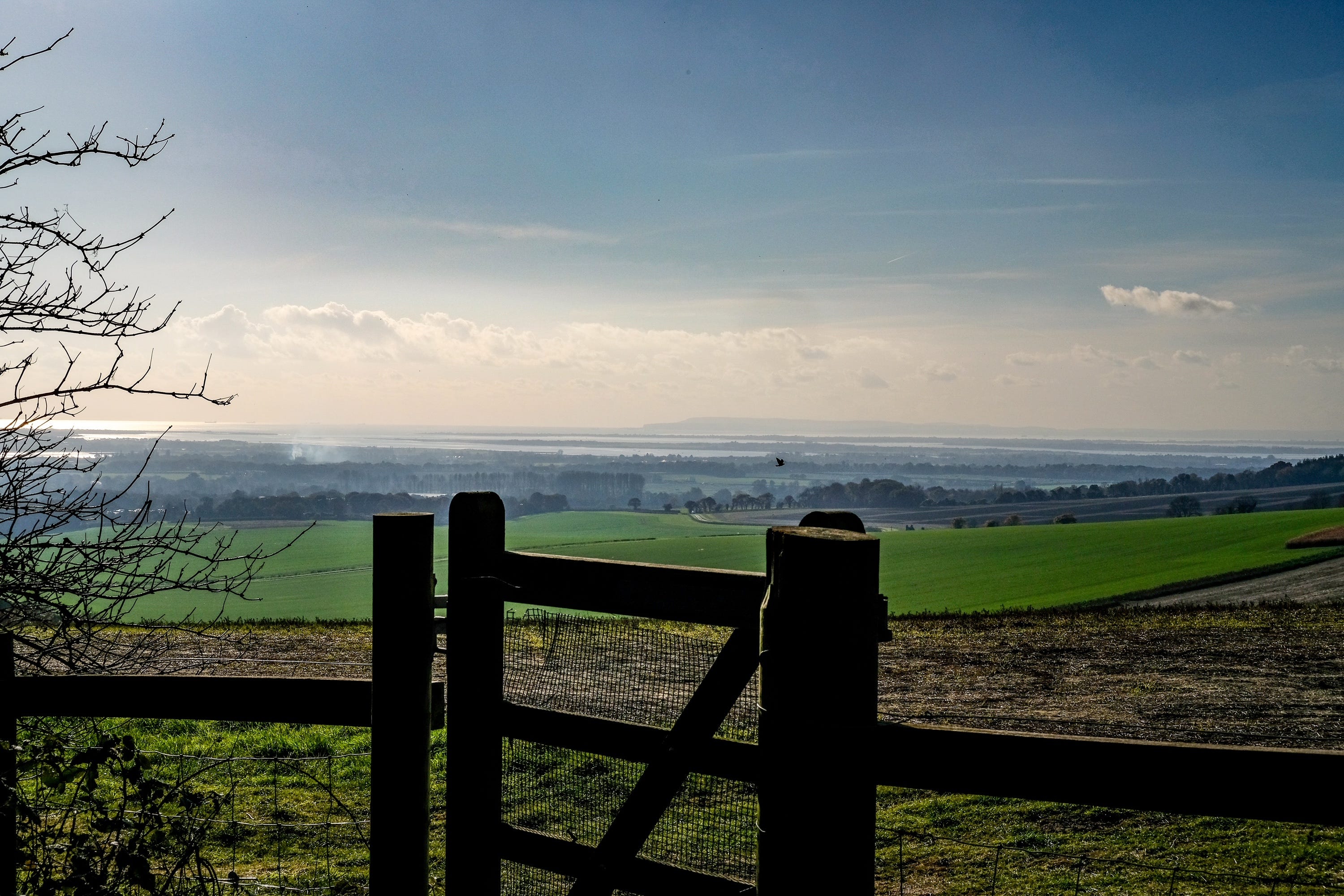
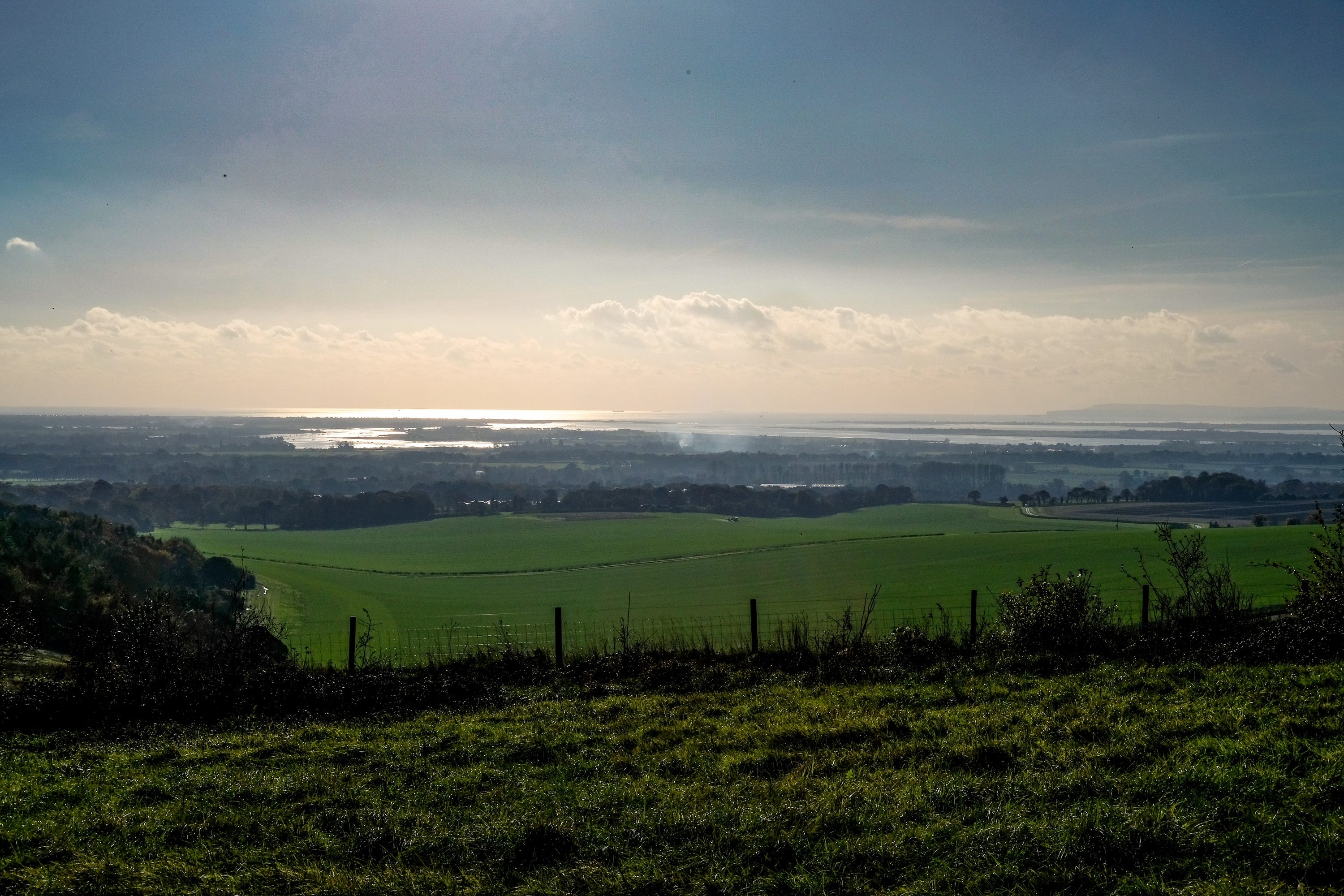
Then you turn south and the whole world opens.
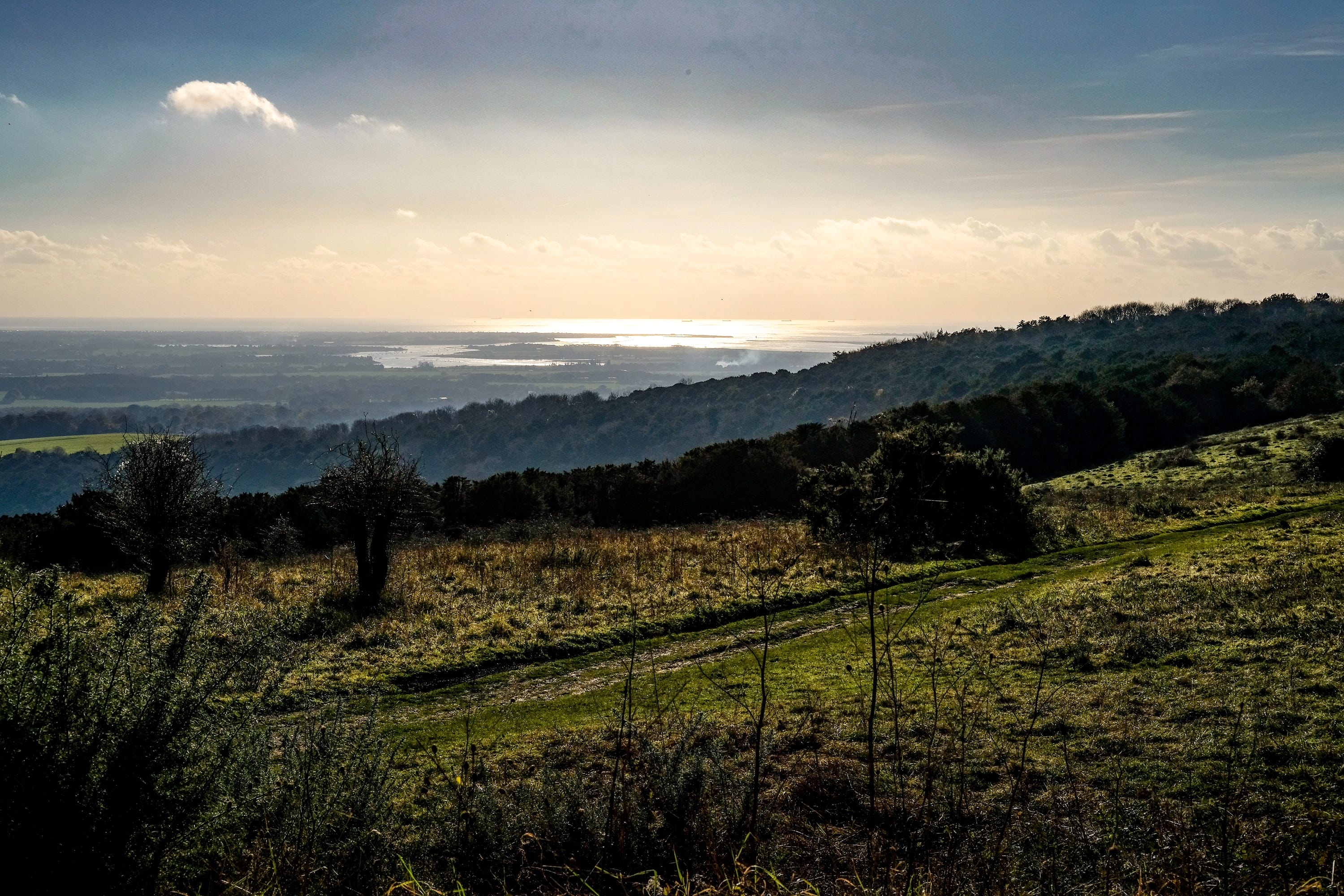
Chichester Harbour glints like a sheet of hammered silver. The Isle of Wight lies quietly on the horizon. The low winter sun washes the fields in that soft, forgiving English light that makes even the most ordinary landscape look mythic.
It’s the same view the Bronze Age farmers saw.
The same the Roman traders saw.
And almost certainly the same one the Danes admired while deciding whether to raid, settle, or — more likely — gatecrash whatever festivities were happening below.
Kingley Vale is full of stories, but it never shouts. It just stands there, ancient and amused, letting every generation project its hopes, fears, folklore, and occasional nonsense onto it.
And honestly? That’s part of its charm.