

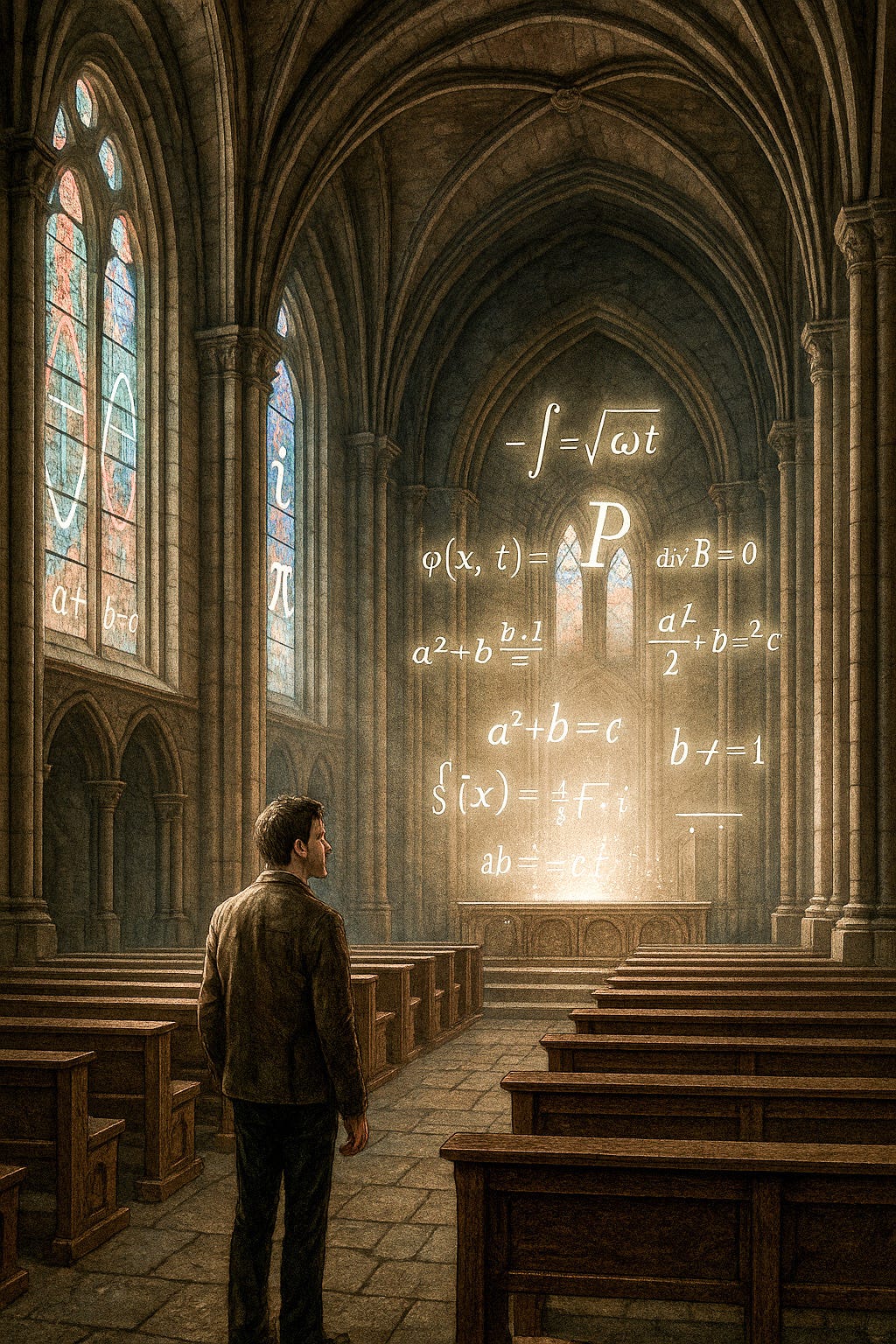
There was a time when the Bible was preached in Latin to people who couldn’t understand a word of it. They were told it was sacred, so they nodded — half in awe, half in fear. The priests knew the words; the people only felt the power.
Science, in its modern form, risks doing the same. Its sermons are delivered in mathematics. Its saints are published behind paywalls. And its miracles — quantum entanglement, relativity, dark matter — are described in a language that the rest of humanity can’t read.
It’s not arrogance; it’s inertia. Each discipline has grown so fluent in its own dialect that even neighbouring fields now struggle to communicate. The result is a Babel of brilliance — dazzling, precise, and increasingly unintelligible.
But knowledge doesn’t need to be arcane to be true. Plain language doesn’t simplify; it clarifies. Images don’t dilute; they reveal. When we describe what we see in words that others can see too, understanding expands — not just between scientists, but between all who share the same curiosity about existence.
That’s what this project is about: translating the liturgy back into sight and sense. Not rebelling against science — but reforming it. Returning to the old way of seeing before the equations took over.
Because truth, if it can’t be spoken clearly, isn’t sacred. It’s lost.