

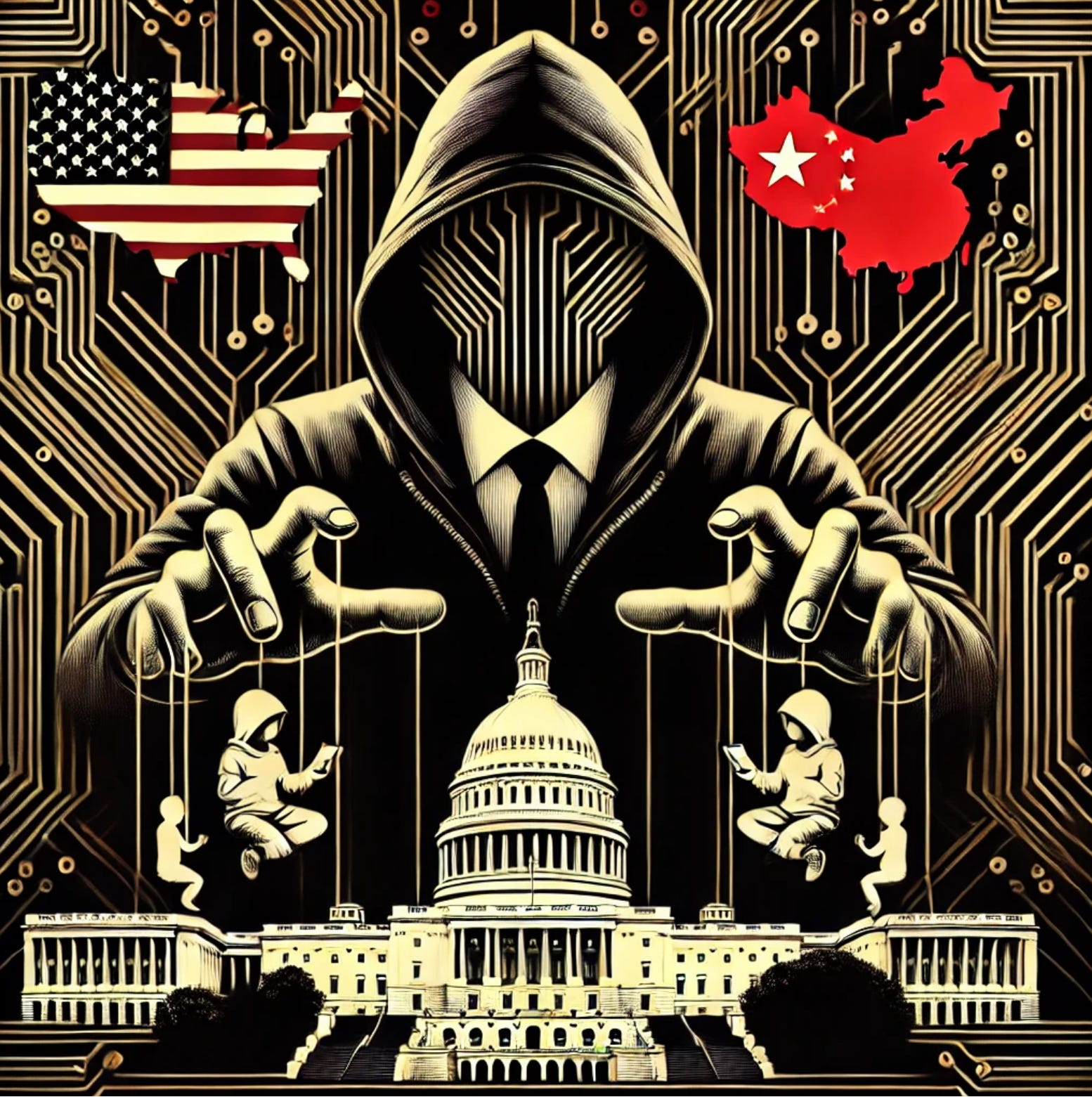
It’s easy to imagine power as something loud — armies, speeches, sanctions, the usual theatre.
But most power today is quiet. Invisible. Conducted through circuits, screens, and the attention spans of children who never agreed to be players in the first place.
When states used to compete, they aimed for territory.
Now they aim for minds — because minds scale faster than borders ever did.
The United States still thinks in terms of institutions and rules. China thinks in terms of systems and leverage. Tech companies, meanwhile, think in terms of habit loops and data streams. Put all three on the same circuit board and you get a geopolitical cocktail no-one fully understands, least of all the people drinking it.
The uncomfortable truth is this: the tools we treat as entertainment are also instruments of influence.
Not in the melodramatic sense of “brainwashing,” but in the quieter sense of shaping what we pay attention to, what we fear, and what we forget.
Most citizens believe they’re observing the world through their devices.
In reality, the world is observing them — and adjusting accordingly.