

Introduction
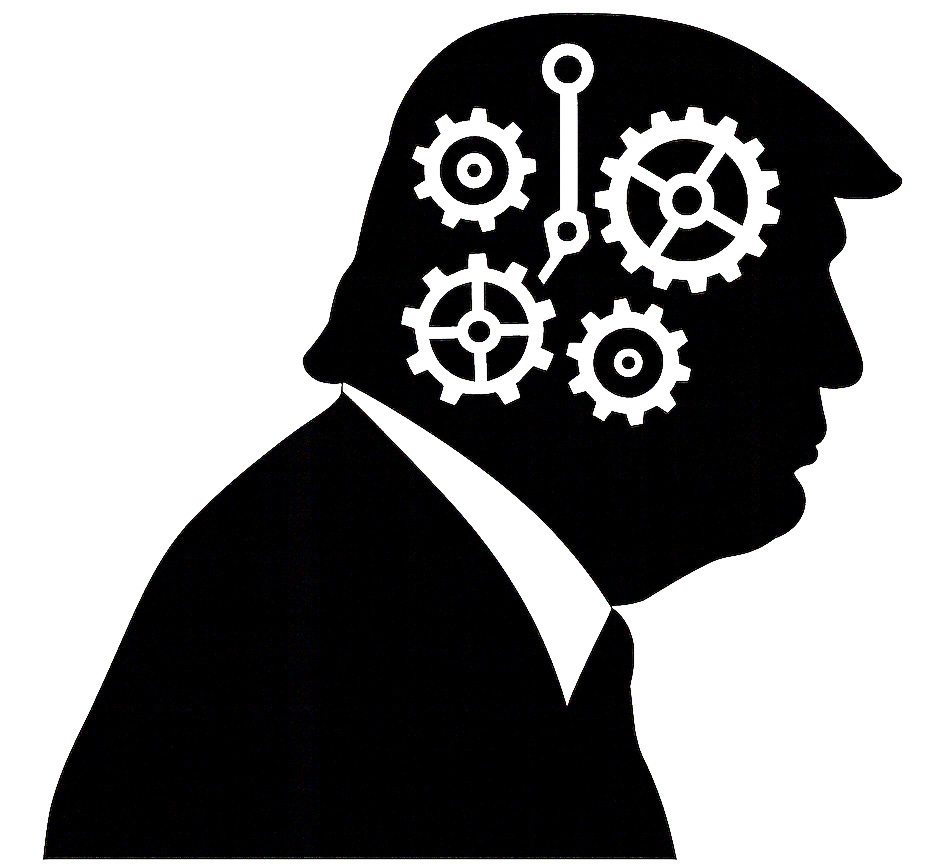
This is a long-form behavioural analysis of Donald Trump — not a biography, not a political argument, but a structural explanation of how he operates.
Prologue
A Difficult Man to Understand
Trying to make sense of Donald Trump has become a modern pastime, and not a particularly easy one. Even seasoned observers — journalists, politicians, analysts, psychologists — often admit that he defies the usual categories. He can be charming one moment, volcanic the next; strangely intuitive in some settings, astonishingly reckless in others. People reach for familiar explanations, but none of them quite stretch far enough.
The one trait everyone recognises is his narcissism. It’s vivid, undeniable, and often overwhelming. And because it’s the only obvious constant, people latch onto it as the explanation for everything else. But narcissism alone doesn’t explain the contradictions: the shamelessness, the fluid relationship with truth, the improvisational speeches, the strange mix of cruelty and showmanship. It certainly doesn’t explain his hold over crowds.
It’s understandable that many interpret these behaviours as stupidity or madness. When someone behaves far outside the norms, we assume they must be either broken or foolish. But that assumption has led countless people down the wrong path. Trump isn’t stupid, at least not in the way people often mean. He’s operating from an entirely different set of instincts — ones that make him unusually difficult to predict, criticise, or contain.
This essay isn’t about defending him, nor is it about attacking him. It’s about acknowledging the challenge he presents: a public figure whose behaviour doesn’t fit neatly into the frameworks we rely on to understand political leaders. Trump’s contradictions aren’t signs of complexity or genius, but they are signs of a personality that doesn’t follow the usual rules. And that makes him easy to misjudge.
What follows is an attempt to look at him with clearer eyes — not morally, but structurally. To set aside the noise and examine the mechanics beneath it. Because if there’s one thing the last decade has shown, it’s that misunderstanding Trump isn’t a small error. It’s a mistake with real consequences.
If we can understand how he operates, we can understand why he keeps defying expectations — and why traditional approaches keep failing.
Chapter 1
The Big Misunderstanding
The central difficulty with Trump is not that people dislike him or disagree with him. It’s that they keep trying to interpret him through frameworks that simply don’t apply. There’s an instinct — a very human one — to assume that public figures behave in broadly recognisable ways: they make arguments, defend positions, seek approval, avoid humiliation, and operate with some regard for the truth. Even when they lie, there is usually a strategy behind it or at least a predictable motive.
Trump doesn’t fit this pattern. He never has.
This isn’t because he’s uniquely complex or uniquely simple. It’s because the tools people use to understand political behaviour don’t map cleanly onto the way he interacts with the world. And so analysts, journalists, and opponents reach for explanations that feel familiar but miss the point: “He’s stupid.” “He’s unhinged.” “He’s a genius at manipulation.” “He’s a narcissist gone wild.” Each of these captures a fragment, but none of them capture the engine.
The misunderstanding begins with the assumption that Trump’s words and actions are meant to communicate what they appear to communicate. That he lies to hide something. That he contradicts himself accidentally. That he lashes out because he loses control. That he flatters because he wants affection. These interpretations work perfectly well for most politicians. They don’t work for Trump.
He isn’t trying to persuade in the traditional sense. He isn’t trying to build a consistent case. He isn’t even particularly concerned with being believed. The mistake is thinking he’s speaking to people. He’s speaking over them — generating atmosphere, tension, emotion, and momentum. In that sense, his behaviour makes far more sense if you stop treating it as political communication and start treating it as crowd management.
This is the heart of the misunderstanding: observers keep evaluating Trump’s words as information, when in reality they function more like instruments. He uses them to stir, provoke, confuse, dominate, or charm, depending on what the moment requires. Truth and consistency aren’t relevant metrics in that system. Emotional effect is.
To be clear, this doesn’t make him a mastermind. It doesn’t make him strategic in the conventional meaning of the word. But it does make him exceptionally hard to counter if you don’t understand the logic behind his behaviour. If you think he’s trying and failing to act like a standard political figure, then everything he does looks like incompetence. If you recognise that he’s playing a different game entirely, the picture changes.
The big misunderstanding isn’t about Trump’s personality. It’s about the lens through which people view him. As long as that lens is wrong, everything that follows will be distorted.
Chapter 2
Why the Usual Labels Don’t Explain Him
When people struggle to understand a public figure, they reach for the simplest available label. In Trump’s case, two explanations dominate almost every conversation about him: he’s a narcissist or he’s an idiot. These assumptions have become so widespread that they’re treated almost as settled fact. But while both observations contain elements of truth, neither comes close to explaining the broader pattern of his behaviour.
The difficulty starts with the nature of these labels. Calling someone a narcissist may capture a great deal about how they see themselves, but it tells you very little about how they operate in the world. Narcissism explains the hunger for attention and praise, but it doesn’t explain the improvisation, the contradictions, the instinctive crowd-reading, or the strange capacity to recover from scandals that would end any other political career. It’s a trait, not a framework.
The second label — stupidity — is even more misleading. It grows out of frustration: the chaotic language, the misspellings, the rambling digressions, the factual nonsense. For many people, it’s easier to assume that a man who speaks in fragments must think in fragments. But the danger here is obvious. Underestimating him on intellectual grounds blinds people to the areas where he is, in his own narrow band, highly capable. Intelligence isn’t a single substance. It comes in different forms, and his happens to be almost entirely emotional and instinctive rather than analytical or conceptual.
Between these two poles — narcissist or fool — people settle into an unhelpful confidence that they understand him. But they’re describing the surface, not the mechanism underneath. Narcissism doesn’t explain why he can hold a crowd’s attention for ninety minutes without notes. Stupidity doesn’t explain why he can land on emotional pressure points with uncanny precision. Neither label explains his ability to generate loyalty through sheer presence, or his talent for dominating a conversation simply by refusing to play by the usual rules.
The truth is uncomfortable but straightforward: Trump’s behaviour doesn’t stem from a single psychological trait. It stems from a rare combination of traits that interact in ways most people have never encountered. When narcissism is mixed with shamelessness, improvisational instinct, emotional opportunism, and a total absence of internal restraint, the result is someone who behaves outside the expected range. Not because he’s complex, but because he’s configured differently.
This is why the usual labels fail. They give people false reassurance — the sense that they’ve named the thing and therefore understand it. But naming is not understanding. And when the label misleads, the understanding never arrives.
To grasp Trump’s behaviour, we need to move beyond the familiar vocabulary and look at the elements that actually drive it. The next chapter will examine those elements — the traits that, in combination, give him his strange and disruptive power.
Chapter 3
The Three Traits That Make Trump Trump
If the usual labels fail to explain Trump, what does?
Not a single trait, but a combination — one that is rare in public life and even rarer in someone who reaches high office. Each element on its own is familiar enough. What’s unusual is how they interact and how consistently they shape his behaviour.
Three traits, in particular, define the way he moves through the world:
A performer’s instinct
A fluid relationship with truth and reality
A complete absence of internal brakes
These traits don’t operate independently; they reinforce one another, creating a personality that behaves outside the range most people expect.
1. The Performer’s Instinct
Some people learn to read a room. Others are born doing it.
Trump belongs firmly in the second category. He responds to human atmosphere the way a seasoned sailor responds to shifting winds — by feel rather than strategy. He watches faces, senses boredom, detects tension, and adjusts instantly. Most politicians rely on prepared lines, briefing notes, and managed messaging. Trump relies on instinct, and often instinct alone.
This isn’t conventional charisma. It’s a form of emotional radar. His rallies function like long improvisational performances where he tests, probes, pivots, and escalates in real time. He isn’t building an argument; he’s shaping a mood. It’s a skill that has little to do with intellect and everything to do with perception.
2. A Fluid Relationship with Truth and Reality
The second trait is more difficult for many to grasp: Trump doesn’t treat truth as something fixed.
This doesn’t mean he lies in the usual way — to conceal wrongdoing or manipulate facts to his advantage. Instead, his relationship to reality is adaptive. He says what produces the emotional effect he wants in the moment, and if the moment changes, the statement changes with it. There is no internal conflict, no hesitation, no cognitive friction.
For most people, contradicting oneself creates discomfort. For Trump, it creates opportunity.
This is why he can deny saying something that is recorded on video, or shift from praise to condemnation in a single breath. He does not experience these reversals as dishonesty. They are simply adjustments — like a performer changing tone mid-sentence to maintain the audience’s attention.
At the same time, it is important to draw a distinction here. Trump is fully capable of deliberate, calculated lying when his own position is threatened. When his legal or personal interests are on the line, he can be highly intentional. What he does not do is lie to protect others. If defending someone else costs him anything, that person becomes expendable. This is why allies, advisers, lawyers, and even family members have found themselves discarded, blamed, or sacrificed the moment they cease to serve his interests.
The instinctive lies and the deliberate ones share the same root: truth is never the priority. Emotional effect and self-preservation are.
3. No Internal Brakes
The third trait is the absence of the psychological mechanisms that restrain most people: shame, guilt, embarrassment, self-doubt, fear of contradiction. These internal brakes regulate behaviour in public life. They shape how most politicians speak and how far they will go.
Trump operates without them.
Without these restraints, he can escalate a lie, double down on an accusation, or reverse himself entirely without hesitation. He can insult a critic, praise the same person minutes later, and insult them again the following day with no sense of inconsistency. He can make promises he has no intention of keeping because the promise itself is merely a tool for the moment.
This lack of brakes doesn’t make him reckless in his own eyes; it makes him free. Free to act without hesitation, to attack without reflection, to deny without embarrassment. It is a kind of psychological momentum that gives him a range of motion other politicians simply do not have.
The Interaction of These Traits
Individually, none of these traits are remarkable. Plenty of people improvise well. Plenty are loose with the truth. Plenty lack self-awareness. But when all three traits coexist — and when the person possessing them is placed in a position of political influence — the result is unusually disruptive.
This combination explains why Trump confuses experts and defeats opponents who underestimate him. They look for strategy where there is instinct. They look for sincerity where there is opportunism. They look for consistency where there is none. And they look for loyalty where there is only self-preservation.
Understanding these three traits, and how they reinforce one another, is essential. They form the base structure for everything else: the rhetoric, the contradictions, the chaos, the crowd manipulation, and the seemingly endless capacity to survive scandals that would finish any other public figure.
Chapter 4
His Words Aren’t Words
One of the most persistent misunderstandings about Trump comes from assuming that he uses language the way most people do — as a vehicle for meaning, ideas, or information. In most public life, words serve a purpose: to argue, clarify, persuade, or explain. Even when politicians lie, they lie in recognisable patterns — to hide wrongdoing, avoid embarrassment, or protect an ally.
Trump’s speech doesn’t follow these rules.
Not in form, not in intention, and not in effect.
To understand him, it helps to set aside the usual expectations and see his words not as statements but as instruments. They are tools used to create an immediate emotional impact, not to convey a coherent message.
This is why people who judge him on factual accuracy end up frustrated. They expect a politician operating in a system of meaning. Trump operates in a system of effect. When he speaks, the question isn’t “Is it true?” or “Is it consistent?” but “What atmosphere does this create?” He is shaping emotional weather, not making arguments.
This is why the contradictions don’t trouble him.
If one statement keeps the crowd with him, he’ll use it.
If the opposite statement works better tomorrow, he’ll use that too.
There is no internal conflict because the aim isn’t truth — it’s resonance.
This approach also explains why his speeches appear chaotic but feel strangely coherent to his supporters. The coherence is emotional, not logical. He repeats themes, rhythms, and cues that signal belonging, conflict, grievance, triumph, or threat. His audience isn’t following a line of reasoning; they’re following a mood.
To many observers, this looks like incompetence or rambling. But in the context of crowd psychology, it is functional. He shifts tone, pace, and content as if conducting an orchestra. If the energy dips, he injects humour. If it rises too much, he pivots to grievance. If he senses anger, he sharpens it with an attack line. Each adjustment is small but deliberate.
This is also why attempts to pin him down with fact-checking rarely work. Fact-checking assumes the speaker cares about the factual content of their own statements. Trump cares about the effect. Correcting the words does nothing to diminish the underlying emotional bond he has created. In fact, it often strengthens it. The more the media focuses on his inaccuracies, the more he frames their scrutiny as hostility — reinforcing the sense of embattlement that energises his base.
Understanding this is essential. Trump is not trying to communicate a policy vision. He is not assembling an argument. He is not seeking approval from a broad audience. His words are more like tools of manipulation than expressions of belief. They are used to maintain dominance, draw attention, test loyalty, and control the emotional landscape around him.
Once you recognise that his speech isn’t meant to be taken literally, the behaviour stops looking erratic and starts looking predictable. He isn’t contradicting himself because he’s confused. He’s contradicting himself because the emotional context has shifted.
Most politicians speak to be understood.
Trump speaks to be felt.
That difference is the key to understanding not just his rhetoric but his entire political presence. It also explains why the normal tools used to hold public figures accountable — interviews, debates, press conferences, fact-checks — repeatedly fail to bring clarity or restraint.
He’s not playing the language game they’re trained to play.
Chapter 5
Conducting the Crowd
If Trump’s words function as tools rather than statements, then his rallies — and even his smaller public appearances — begin to make more sense. They are not political events in the traditional sense. They’re performances, and Trump is most at ease when he is at the centre of them. In these settings, his instincts are at their sharpest. He is not simply speaking to a group of supporters; he is shaping the emotional state of the room.
For most politicians, public speaking is a form of controlled delivery. They rehearse lines, manage timing, and aim for clarity. Trump approaches these events differently. He treats the audience like a living instrument, one that responds to cues, rhythms, and provocations. He senses when the room is restless or excited, and he adjusts himself in real time — speeding up, slowing down, interrupting himself, or veering off into anecdote. The surface may appear rambling, but beneath it is a continuous feedback loop between performer and crowd.
This isn’t strategic in the way political strategists use the word. There’s no carefully plotted arc or grand design. It’s closer to improvisation — instinctive, reactive, shaped by feeling rather than thought. If a line works, he keeps pressing it. If a joke lands, he repeats it until the energy drops. If the mood flattens, he pivots abruptly to grievance or threat or self-praise. The flow is driven by emotional calibration rather than content.
This explains the extraordinary loyalty of some supporters. They are not responding to policy, consistency, or rational persuasion. They are responding to the feeling of being carried along by a performance that recognises and amplifies their emotional state. At a rally, Trump mirrors the crowd’s frustrations, angers, hopes, and resentments, then feeds those feelings back to them in intensified form. It creates a sense of connection that many mistake for authenticity. But it is not authenticity — it is synchronisation.
To an outside observer, the result can look chaotic, even incoherent. But within the emotional logic of the moment, it holds together. Trump uses repetition, exaggeration, and sudden shifts in tone to maintain momentum and to keep the audience from settling into passive listening. This is why people who have watched him closely for years often comment that he “reads a room better than anyone.” It isn’t a compliment, nor is it an insult. It’s an observation of how he naturally operates.
His ability to sense group energy also explains his aversion to environments he cannot control. Press conferences, formal interviews, legal depositions — settings where the emotional temperature is set by others — make him visibly uncomfortable. He cannot recalibrate the dynamic in the way he can at a rally or friendly media appearance. Without the feedback of a supportive crowd, he loses the intuitive advantage that defines his public persona.
Understanding this is key to understanding his political style. Trump is most powerful not when he is making arguments, but when he is conducting emotion. He doesn’t persuade or explain. He generates atmosphere. And in modern politics — especially in a fragmented media environment — atmosphere can be far more influential than argument.
This dynamic is often underestimated by those who focus on policy or rhetoric. They analyse what he says. His supporters respond to how he makes them feel. The disconnect between those two perspectives explains much of the confusion surrounding him.
He isn’t trying to lead a movement in the traditional sense.
He is trying to hold a crowd.
And when he succeeds, the political effect can be profound — even if the method looks, on the surface, like improvisation rather than leadership.
Chapter 6
The Press Falls for It Every Time
If there is one group Trump consistently outmanoeuvres without even trying, it is the press. Not because journalists are foolish or corrupt, and not because they secretly admire him. It’s simpler than that. Most of the modern media ecosystem works on assumptions about language, truth, and accountability that Trump simply doesn’t share. And when someone refuses to play by the usual rules, the system built to monitor them starts malfunctioning.
The first problem is the journalistic reflex to treat every statement as if it were meant to convey information. When Trump makes an outrageous claim, journalists respond as they have been trained to: they fact-check it, contextualise it, compare it to previous statements, and seek comment from others. This is exactly the right response for a normal political figure. But for Trump, these efforts are beside the point. They treat his words as propositions to be verified, when they were never offered as such. He is creating atmosphere. They are debating accuracy. The two activities rarely intersect.
The second problem is the media’s appetite for spectacle. Trump, more than almost any modern figure, creates spectacle effortlessly. Each contradiction, outburst, insult, or wild projection becomes a headline. Even negative coverage amplifies his presence. Outrage is oxygen. Criticism is fuel. Attempts to hold him accountable often end up strengthening his reach, because they keep him at the centre of the conversation — exactly where he prefers to be.
This isn’t a deliberate trap in the strategic sense. It’s a dynamic. Trump generates chaos because it benefits him, and the media amplifies chaos because it benefits them. The incentives align just enough to create a feedback loop in which the noise becomes self-sustaining. Even journalists who are deeply critical of him often acknowledge privately that he is good for ratings, clicks, and attention. Not because they want him in power, but because he reliably produces drama — and drama is what the modern media environment is built to circulate.
Another difficulty lies in the journalistic pursuit of “balance.” When Trump drags others into a scandal — Bill Clinton, Bill Gates, political opponents, celebrities, or anyone else — some outlets feel compelled to explore the allegation. The result is predictable: the focus widens, the story dilutes, complexity rises, and the original issue becomes harder to follow. Trump thrives in that widened field of confusion. When everyone is implicated, accountability becomes abstract.
Fact-checking, too, has limits. It works only when the subject cares about being factually correct. Trump does not. His supporters do not evaluate him on accuracy, and his critics already assume he is lying. The fact-check becomes part of the drama rather than an instrument of clarity. It documents the behaviour but rarely changes its impact.
The press also misinterprets Trump’s silences. When he avoids questions, refuses interviews, or hides behind brief, controlled appearances, many assume he is off-balance or unprepared. But silence, for Trump, is often tactical. If he cannot control the emotional environment, he avoids it. Instead, he waits for a moment when he can generate maximum effect with minimal risk, then re-enters the public space on his own terms. The media, hungry for any sign of movement, responds with the intensity he anticipates.
All of this creates a structural vulnerability. A media system designed to analyse statements, reveal contradictions, and expose lies is simply not equipped to handle someone who treats statements, contradictions, and lies as interchangeable tools. The press assumes language is a window into intent. For Trump, language is a lever.
None of this means journalists are failing in principle. They are doing their jobs within a system that expects a certain kind of actor. Trump is not that actor. And until the press stops treating him as if he is, he will continue to exploit the mismatch.
He confuses them not because he is brilliant, but because he refuses to participate in the model they were trained to navigate.
Chapter 7
Chaos as a Weapon
To understand Trump’s political behaviour, it’s necessary to recognise that chaos is not a by-product of his style. It is one of his most effective tools. The noise, contradictions, provocation, and unpredictability that surround him are not evidence of lack of control. In many situations, they serve a clear functional purpose: they protect him, they disorient his opponents, and they draw attention away from whatever poses the greatest threat in the moment.
This does not require planning in the conventional sense. Trump is not sitting in a back room mapping out psychological strategies on a whiteboard. The mechanism is simpler and more instinctive. Chaos benefits him, and he gravitates toward whatever behaviour produces that outcome. Over time, he has learned — consciously or not — that when the atmosphere becomes confused or emotionally charged, he gains room to manoeuvre.
The essential principle is this:
when everything is in disorder, nothing is clearly his responsibility.
A damaging story becomes just one scandal among many.
An accusation becomes “politics as usual.”
A detailed investigation becomes “a witch hunt.”
A clear fact becomes “just another opinion.”
A lie becomes “something someone said once.”
The individual threads dissolve into a larger fog.
This is why he often escalates rather than retreats when under pressure. Most public figures try to stabilise the environment around a scandal. Trump destabilises it. When damaging information emerges — a legal setback, a leaked document, a serious allegation — he amplifies the noise. He launches new claims, revives old feuds, makes outsized accusations, or drags unrelated figures into the story. The aim is to force the public, the media, and his allies into a reactive posture. Once everyone is reacting, no one is focusing.
Chaos also functions as a loyalty test.
When Trump contradicts himself or says something obviously false, supporters are forced to choose between the facts and the leader. For some, defending the indefensible becomes a badge of belonging. The more outlandish the claim, the stronger the demonstration of loyalty from those who repeat it. This dynamic feels irrational from the outside, but from within the movement it reinforces identity.
An important feature of the chaos dynamic is Trump’s willingness to sacrifice almost anyone to maintain it. Allies, advisers, lawyers, even family members can be blamed or discarded if doing so shifts attention away from him. He will defend others only when doing so protects himself; when it doesn’t, they become part of the collateral. This reinforces the atmosphere of instability — no one around him can predict when they will be pulled into the fire or pushed under the bus.
Chaos also gives him flexibility. A consistent position limits movement. Contradiction creates space. If he says one thing today and the opposite tomorrow, he can claim whichever version serves him best in the moment. And because he does not recognise contradiction as a problem, the inconsistencies accumulate without consequence in his own mind. The burden of explanation always falls on others.
There is a second layer to this: chaos confuses accountability.
Institutions rely on sequence and clarity — what happened, who did what, what was said, what was intended. When the ground is shifting constantly, that clarity evaporates. By the time a journalist or prosecutor has assembled the timeline, Trump has introduced five new narratives. The result is exhaustion, and exhaustion is a form of victory.
This does not mean chaos is a masterplan. It is not strategy in the traditional sense. It is closer to instinctive opportunism. Trump pushes where resistance is weakest, speaks where attention is highest, denies when denial is useful, attacks when attack is necessary, and contradicts himself whenever the emotional context shifts. The through-line is not logic but advantage.
For those accustomed to stable political behaviour, this approach seems self-destructive. But for Trump, the calculation is different. Stability limits him. Chaos enlarges the field. And until the political and media systems recognise how this operates, they will continue to misread the noise as confusion rather than what it often is: a method.
Chapter 8
Why His Opponents Keep Misjudging Him
For nearly a decade, Trump’s opponents — political, legal, media, and cultural — have been united in one repeated mistake: they keep assuming that the next scandal, the next contradiction, or the next legal blow will finally expose him, finally end him, finally bring the whole edifice crashing down. Again and again, they expect conventional consequences to apply to an unconventional figure. And again and again, they are surprised when nothing of the sort happens.
This is not because Trump is invincible. It’s because his opponents are using the wrong map.
They assume he behaves like a normal political actor.
He doesn’t.
They assume he thinks in terms of consistency, credibility, and reputation.
He doesn’t.
They assume he fears shame.
He doesn’t.
They assume the truth will eventually corner him.
It rarely does.
Opponents often misjudge him in three predictable ways.
1. They attack his statements instead of the mechanism behind them.
Trump’s critics spend enormous energy fact-checking, correcting, and cataloguing his falsehoods. It’s an understandable impulse — accuracy matters, and democratic accountability relies on it. But the focus on his words, rather than on the emotional effect those words are designed to produce, means critics are always one step behind.
They are responding to content.
He is generating atmosphere.
When they correct him, he reframes the correction as hostility. When they expose contradictions, he reframes it as persecution. When they highlight absurdity, he reframes it as elite snobbery. Every attempt to pin him down gives him material. Every factual rebuttal becomes another chance to claim victimhood.
The mechanism behind the words goes unexamined: the emotional synchronisation with his base, the destabilising fog he creates, the improvisation that re-centres him in every news cycle. Attack the symptom, ignore the engine — and the engine keeps running.
2. They expect loyalty to matter to him. It doesn’t.
Traditional politics is built on reciprocal obligations. If you support someone, you expect some degree of protection in return. Trump breaks this pattern constantly. Allies who defend him one day may find themselves discarded the next. Those who risk their careers for him may discover that he barely remembers their names.
Opponents assume this will damage him. They predict that discarded allies will turn on him and that the chaos will finally catch up.
But Trump’s system isn’t based on loyalty — it’s based on dominance and dependency.
People orbit him while the rewards outweigh the risks.
When the risks overwhelm the rewards, they leave — and he replaces them.
The cycle repeats because he does not need stable alliances. He needs usable ones.
Opponents treat each broken loyalty as if it proves some great internal implosion. Trump treats each broken loyalty as a transaction. And the public, numbed by repetition, stops being shocked.
3. They keep expecting shame to work. It never does.
This may be the single biggest miscalculation.
Politicians survive on public approval, and shame is usually the force that keeps their behaviour within certain limits. Trump simply doesn’t possess that mechanism. When faced with humiliation, most leaders withdraw, reflect, or apologise.
Trump counterattacks.
Shame weakens other people.
It energises him.
This reversal confuses opponents because they’re used to a world where shame is a restraint. But when someone has no internal brakes, shame becomes a fuel source. It drives him into the spotlight rather than out of it. The more he is criticised, the more he performs. The more he is caught lying, the more he escalates. The more absurd his behaviour becomes, the more he doubles down.
Opponents mistake this escalation for panic. But often it is simply Trump reverting to the only method he knows: overwhelm the environment with chaos until lines blur and accountability dissolves.
The Core Misjudgment
All these errors stem from one basic misunderstanding:
his opponents keep expecting him to behave like a politician, when he behaves like a performer.
They look for strategy where there is instinct.
They look for consistency where there is improvisation.
They look for rational persuasion where there is emotional manipulation.
They look for consequences where there is only momentum.
This isn’t defeatism, and it’s not admiration. It’s diagnosis.
Until opponents grasp the underlying dynamics, they will continue to misread him — not because they are naïve, but because they are using tools designed for a different kind of adversary.
Trump doesn’t win because he outthinks his opponents.
He wins because he refuses to play by the rules that define their thinking.
Chapter 9
The Politics of Revenge
If there is one feature of Trump’s personality that is both undeniable and consistently underestimated, it is his instinct for revenge. Not policy retaliation, not strategic counterattack, but something far more personal and enduring: the refusal to forget any slight, and the compulsion to repay it — loudly, publicly, and disproportionately.
Most politicians understand that grudges are expensive. They complicate alliances, distract from priorities, and risk alienating supporters. Trump is different. Revenge is not a cost; it is a reward. It gives him energy. It restores his sense of dominance. It reinforces his belief that the world is divided between loyalists and enemies, with nothing in between.
This instinct does not arise from calculated strategy. It comes from emotional architecture. Trump experiences slights — real or imagined — as direct threats to his status. And because he views relationships through the lens of dominance rather than trust, any challenge becomes personal. The language shifts immediately:
traitor, disloyal, weak, pathetic, backstabber.
Once someone enters that category, there is rarely a route back.
This matters politically because it shapes every aspect of his leadership.
Governance becomes secondary; personal justice becomes primary.
Agendas bend. Priorities shift. Policies are praised or abandoned based on whether they serve his desire to settle scores. Entire teams are reorganised because someone displeased him. Experienced officials are replaced with loyal amateurs because loyalty — or the appearance of it — ranks above competence.
Revenge also creates instability around him. Allies become nervous, always aware that one misstep might push them into the category of “traitor.” This insecurity distorts decision-making. People stop offering honest advice. They anticipate his reactions. They compete to be the most flattering voice in the room. The result is an environment where information is filtered, warnings go unspoken, and competence is overshadowed by fear of displeasure.
Another feature of Trump’s revenge instinct is its longevity. Most people cool down. He doesn’t. A slight from ten years ago feels as fresh to him as a slight from yesterday. Old enemies are never forgotten; new ones are added to the list. The catalogue simply grows. And when he regains a platform — whether political, legal, or media — the pursuit resumes.
This is important for another reason: revenge shapes his perception of the world.
Opponents are not simply political adversaries; they are enemies who must be punished.
Critics are not simply commentators; they are betrayers.
Even institutions can fall into this category — courts, agencies, media outlets — if they challenge him.
This is where the political consequence becomes dangerous.
A leader who prioritises revenge over governance can destabilise entire systems.
Not through ideology, but through personal fixation.
At the same time, it’s vital to understand this behaviour not as villainy but as psychology. He is not plotting elaborate schemes of vengeance. He is reacting. His emotional framework cannot distinguish between personal insult and political opposition. The two are fused. If someone criticises him, obstructs him, or fails to defend him enthusiastically enough, he experiences it as betrayal. And the response is automatic: attack, humiliate, diminish.
There is a final reason why revenge sits at the centre of his political identity:
it reassures his supporters.
Many of them feel wronged, overlooked, belittled, or pushed aside. When Trump promises to go after his “enemies,” they hear an echo of their own grievances. His revenge becomes symbolic — a form of justice they feel they have been denied. His personal vendettas get mistaken for strength.
But vengeance is a corrosive form of strength.
It consumes attention, distorts priorities, and leaves no room for compromise.
It turns leadership into a perpetual settling of scores.
And it explains why Trump, even at his most politically vulnerable, is still capable of sudden escalation. Rage, for him, is not a breakdown. It’s fuel.
Chapter 10
The Magical Thread: His Only Real Vulnerability
For all the power Trump appears to command — the rallies, the noise, the headlines, the legal battles, the constant presence — there is one truth that sits quietly beneath it all: his entire political existence depends on a single emotional thread. Not policy, not ideology, not organisation, not intellect. Emotion.
Trump’s supporters do not follow him because he gives them coherent ideas.
They follow him because he gives them a feeling.
They feel heard.
They feel defended.
They feel energised.
They feel seen in their frustration.
They feel part of something forceful and alive.
That emotional thread is the real foundation of his power. And for all his apparent invulnerability, it is also his weakest point — far weaker than the press, his opponents, or even his inner circle often realise.
Unlike ideological loyalty, emotional loyalty can break suddenly.
When it breaks, it rarely repairs.
For years, Trump has maintained the thread by synchronising himself with the crowd: their grievances, their anger, their sense of being wronged. He amplifies these feelings, reflects them back, intensifies them, and wraps himself inside them. To his supporters, he becomes the voice of their own discontent — not a leader, but an embodiment.
This makes the connection powerful.
It also makes it fragile.
The bond works only as long as Trump remains the champion in the story — the one who strikes back, the one who exposes the villains, the one who fights for the forgotten. The moment he becomes part of the darkness rather than the one shining a torch at it, the emotional alignment falters.
This is why certain scandals bounce off him — financial fraud, tax games, business failures, marital chaos. His followers don’t mind these things. They’ve seen worse in their own communities. They don’t care whether he lies or swears or contradicts himself. They care whether he is their fighter.
But there are two kinds of stories that threaten him in a way nothing else does:
Stories that make him weak.
Stories that make him morally contaminated.
Weakness breaks the spell because strength is the core of his persona.
Contamination breaks the spell because people will forgive hypocrisy and corruption, but they will not forgive someone who aligns with the darkness they fear.
And this is where the current moment becomes genuinely dangerous for him.
The Epstein files don’t just threaten him legally.
They threaten the emotional thread.
Trump’s base can forgive affairs, infidelity, adult scandals, crude behaviour — all of it. But underage girls sit in a different category entirely. Even people predisposed to defend him feel something tighten when the subject shifts to exploitation of minors. It is not ideological. It is instinctive.
If that instinct kicks in, the emotional thread snaps.
Not slowly.
Suddenly.
The risk is not that his supporters will instantly abandon him in outrage.
The risk is erosion: a small, unspoken doubt entering the emotional bloodstream. A hesitation. A quiet discomfort. A subtle sense that something feels “off.” When that feeling appears, even faintly, the entire mechanism of his influence weakens.
And Trump knows it.
This is why, when the Epstein documents began to move back into the public conversation, he escalated into maximum chaos — wild accusations, scattershot attacks, dragging in Bill Clinton, Bill Gates, and anyone else the media might chase. The aim is instinctive: flood the field, widen the blame, bury the singular threat inside a swarm of noise.
He cannot allow a clear emotional picture to form.
He cannot allow the story to settle.
He cannot allow the public to dwell on him in relation to young girls.
He cannot survive that reflection.
For a man who lives entirely through emotional synchronisation, moral contamination is existential. Not politically — psychologically. Losing the crowd is not just losing influence; it feels to him like a kind of death. This is why he fights with such frantic intensity whenever scandals touch this particular nerve.
The magical thread is his source of strength.
But if it snaps, there is no safety net underneath.
No ideology.
No party infrastructure.
No policy legacy.
No quiet dignity.
No reservoir of trust.
Only the echo of a performer who lost the room.
And in Trump’s world, losing the room is the one fate he cannot endure.
Epilogue
Clarity in the Fog
Trump is often described as an enigma — a puzzle no one can solve, a shape-shifter who slips through contradictions untouched, a political force who breaks every rule and still somehow lands on his feet. For years, people have treated him as if he were something beyond ordinary comprehension: a manipulator, a mastermind, a madman, a demagogue, a genius, a fool.
But the closer you look, the less mystical he becomes.
He isn’t a riddle.
He isn’t a supernatural disruptor.
He’s a human being built from the same components as everyone else — just arranged in an unusual order, with some traits amplified and others missing entirely. Everything that confuses people about him becomes clearer once that configuration is understood.
His behaviour is not strategic brilliance.
It’s instinct.
His contradictions are not clever traps.
They’re improvisations.
His lies are not ideological.
They’re emotional tools.
His rage is not madness.
It’s fuel.
His chaos is not accidental.
It’s advantageous.
And his power does not come from complexity.
It comes from resonance.
Once you see the mechanism, the fog lifts.
You stop wasting energy on the noise.
You stop taking every outburst at face value.
You stop expecting shame to restrain him.
You stop chasing every provocation.
You stop being surprised by the contradictions.
You stop misreading chaos as confusion rather than method.
You stop assuming that political tools will work on a man who does not operate within political psychology.
Clarity does not make Trump smaller.
It makes him human again.
And when someone becomes human, they become understandable — and manageable.
The point of understanding isn’t to admire him or despise him.
It’s to stop being disoriented by him.
Trump’s entire impact relies on misinterpretation — on a system reacting to him as if he were playing the same game as everyone else. Once that illusion breaks, the dynamic changes. Not because he changes, but because the world around him responds differently.
He will continue to perform, contradict, escalate, and provoke.
He will continue to use chaos to obscure vulnerability.
He will continue to retaliate, improvise, and seek emotional dominance.
He will continue to operate according to the traits that define him.
But understanding those traits removes the shock factor.
It lets journalists stop feeding the cycle.
It lets politicians stop falling into the same traps.
It lets the public see through the fog instead of drowning in it.
It lets the conversation move from reaction to comprehension.
Clarity is not a weapon.
It is a stabiliser.
And in a world where chaos has been used so effectively, stability is power.
Trump will not change. That much is clear.
But we can change how we interpret him — and that alone reshapes the terrain.
In the end, he is not unbeatable, unexplainable, or unstoppable.
He is simply a man with an unusual mix of very ordinary traits, magnified by position and amplified by misunderstanding.
And once you truly understand him, the spell breaks.
Not through outrage.
Not through fear.
Through comprehension.
Clarity is the antidote to chaos.
And clarity, ultimately, is something entirely within our reach.