

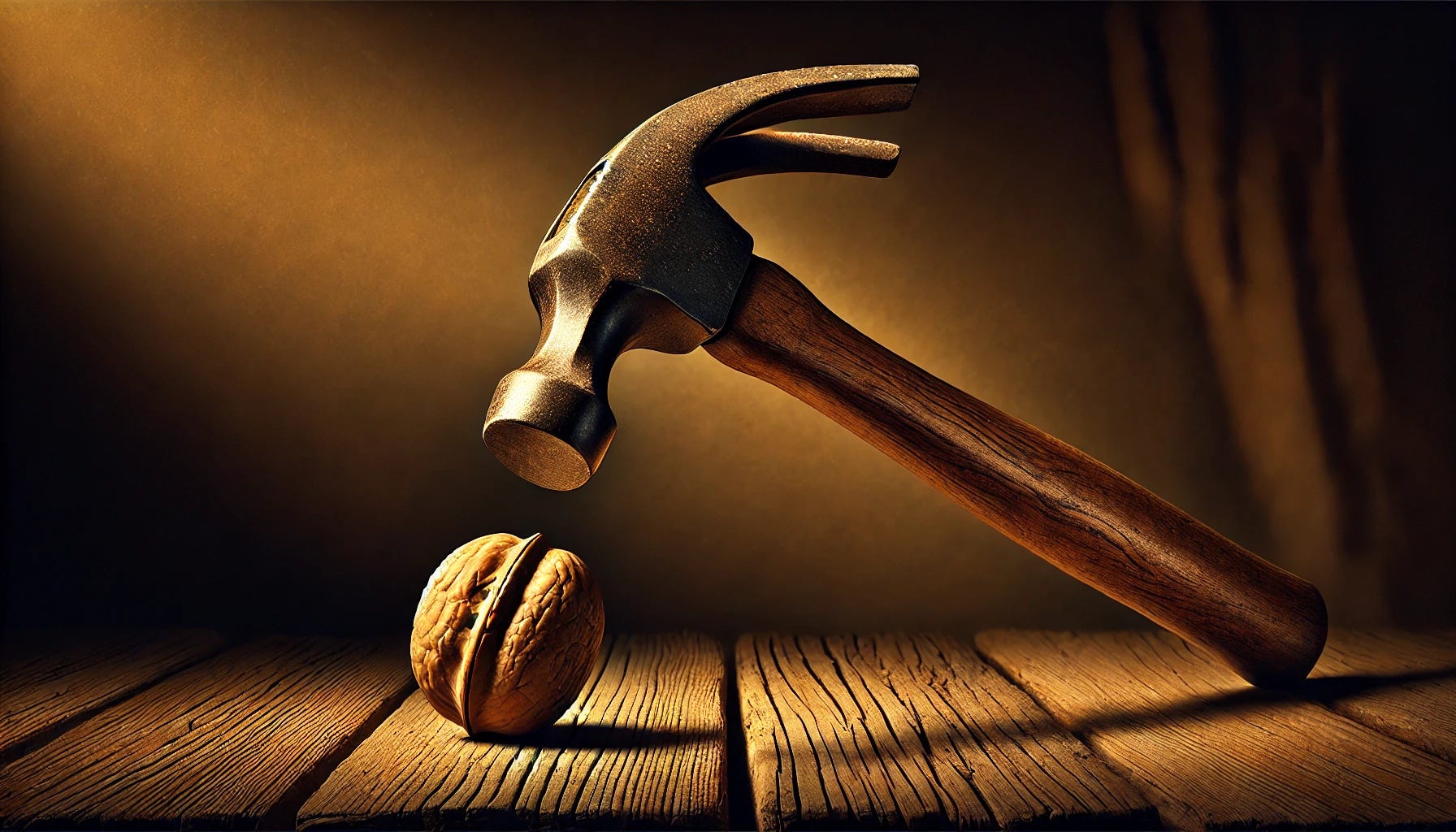
Not “no manual” in the sense that engineers forgot to ship a PDF, but no manual in the deeper sense: no barrier, no apprenticeship, no period of awkward incompetence that forces you to learn what the tool really is before you can use it.
When the printing press arrived, what did it demand of its users?
And what took generations to develop: literacy as decoding, or literacy as discernment?
When the telegraph arrived, what did it demand?
Was the friction of Morse code merely inconvenience — or was it a filter that made incompetence visible before consequences became structural?
When the telephone arrived, what did it force humans to learn that had nothing to do with technology?
Were social conventions a kind of manual — written not on paper, but in embarrassment, missteps, and slowly stabilised norms?
When personal computers arrived, why did they feel hostile?
Was the punishing interface an accident of early design — or a crude form of discipline that made error obvious and correction unavoidable?
And even when the internet arrived “for everyone”, what did it still require?
Navigation. Source evaluation. A new kind of scepticism. A learned ability to separate signal from noise.
So here’s the question that matters: what did all these technologies have in common that we’ve quietly forgotten to value?
Was it the technology itself — or the friction that forced maturity?
If competence used to be forged through visible failure, what happens when failure stops being visible?
If learning curves used to act as protection, what happens when protection is removed?
And what happens when the cycles accelerate?
When radio compresses changes that once took centuries into decades?
When television intensifies the same dynamic and makes the consequences socially legible?
When the personal computer goes from command lines to icons and suddenly allows people to use it without understanding it?
At what point does ease stop being democratisation and start becoming concealment?
Social media lowered the barrier to entry almost to zero — but it still left traces, didn’t it?
You could at least see behaviour. You could observe compulsion. You could notice attention fragmentation. You could feel the slow reshaping of incentives.
But what if the next tool removed even that last residue of friction?
What happens when the interface is conversation — the oldest human interface of all — and the tool speaks fluently from the first second?
What happens when a tool performs “competence” regardless of whether the user is competent?
What happens when a tool produces polished output whether it is accurate, half-true, or entirely fabricated?
If earlier technologies punished mistakes, what happens when mistakes come dressed as professionalism?
And if the learning curve still exists — but is invisible — how would you even know you were climbing it? How would you distinguish disciplined use from careless use, if both look and feel the same?
What happens to education if writing can be produced without thinking?
What happens to professional life if reports can be delivered without verification?
What happens to research if synthesis becomes available without reading — and the difference between synthesis and understanding gets blurred beyond recognition?
What happens when “relief” arrives instantly?When the hard work — reading, structuring, checking, thinking — can be bypassed with a prompt?
And what happens when relief and capacity-building operate on different timescales?
When one feels good immediately, and the other only reveals itself years later?
At what point does assistance quietly become substitution?
And if that shift is gradual, how would you notice it while it’s happening?
If a tool can do the “sort” phase — the grinding organisation of complexity — better than any human ever could, what should humans do with that advantage?
What should we not ask the tool to do, no matter how fluent it sounds?
Where exactly is the boundary between capability and authority?
Between processing and judgment?
Between pattern completion and understanding?
And if the tool cannot know whether its output is true, who carries the burden of truth?
Who verifies?
Who bears responsibility when confident prose turns out to be confident nonsense?
If the stakes are now higher than social media — because the tool touches not just attention, but thought itself — what does “operational maturity” even look like?
Is it a set of principles?
A discipline?
A posture of scepticism?
A refusal to outsource final responsibility?
And if patterns are forming now — through millions of small interactions — what happens if we get those patterns wrong early, and only realise later when they’ve become infrastructure?
Are we, in other words, standing at a fork in the road without admitting we’re choosing?
One path leads to something like collective intelligence: humans judging, verifying, directing — with the tool sorting, organising, scaling.
The other path leads to something else: sophisticated output masking degraded capacity — competence performed, not developed.
Which path are we actually walking?
And finally — the question nobody seems to ask out loud:
What if the real significance of a tool that performs cognition without consciousness is not whether it becomes “like us”…
…but whether it forces us to define what “like us” even means?
